IN Brief:
- Jungheinrich’s PowerCube uses automated shuttles to increase storage density and throughput.
- HMS Networks provides Anybus wireless connectivity for shuttle control and communications.
- The system supports dense storage, existing-building automation, cold storage, and future cybersecurity requirements.
Jungheinrich is using HMS Networks’ Anybus wireless technology to support shuttle communications in the PowerCube, its automated compact container storage system for high-density warehouse operations.
The PowerCube is designed to increase storage density and order-processing speed by using automated shuttles inside a compact grid. The system can deliver up to four times higher storage density than conventional shelving, reach system heights of up to 12 metres, and allow each shuttle to carry two containers at once, with a payload of up to 50kg per container.
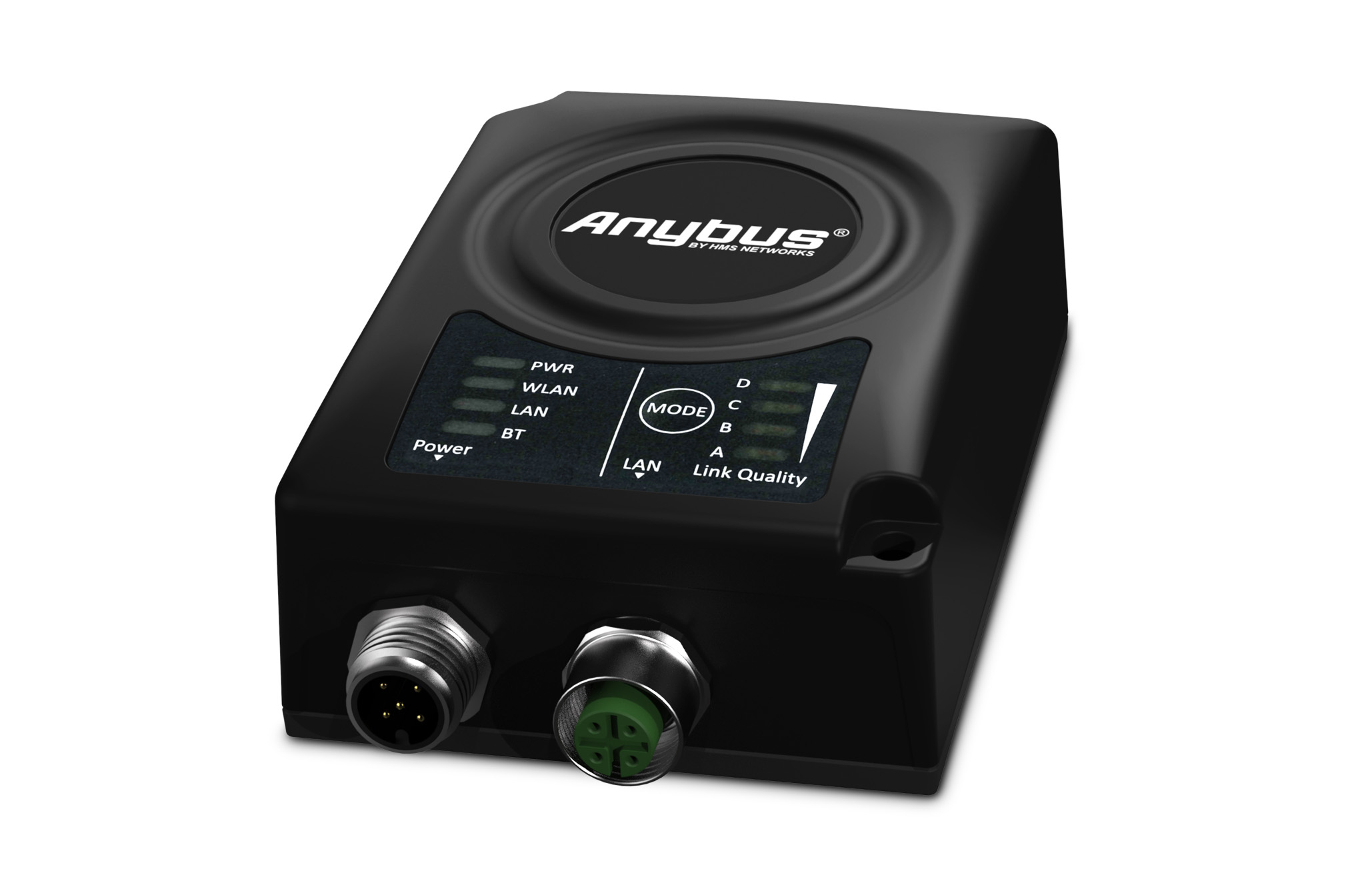
At the centre of the system is Jungheinrich’s warehouse control software, which coordinates shuttle movement across the storage grid. Because the shuttles require unrestricted movement, conventional cabling is not viable. HMS Networks supplies the wireless backbone, using Anybus Wireless Access Points and Anybus Wireless Bridge II units to maintain Ethernet communication as shuttles move through the installation.
Carlos de Almeida, Head of Software Development at Jungheinrich, said: “Our customers need a way to use limited space efficiently while meeting growing demands for faster order processing.”
The wireless setup uses point-to-multipoint architecture, allowing shuttles to roam between access points while maintaining continuous Ethernet connectivity. Dual-band segmentation separates maintenance and tablet communication from shuttle control and safety communication. IP67-rated hardware supports use in demanding environments, including cold storage where condensation can create reliability issues.
The PowerCube is now entering real-world applications, including deployment at Fastbolt, where the system is being used to improve order processing and space utilisation. Jungheinrich plans to scale the system into larger deployments with greater storage surfaces and higher shuttle counts, increasing the need for advanced wireless design and network monitoring.
Warehouse automation is moving quickly towards denser, more modular systems. Operators are under pressure to increase throughput without always having the option to move to larger buildings. The rise of pallet shuttle systems reflects stronger demand for scalable, dense, retrofit-friendly automation. PowerCube sits in the same investment climate, but at container level.
The value of compact storage is strongest where space is constrained, order profiles are changing, and labour-intensive picking is becoming harder to sustain. E-commerce, wholesale, retail, industrial spare parts, and third-party logistics operations all face pressure to process more orders from limited footprints. A system that increases density and moves goods to workstations can reduce walking time and improve consistency.
Connectivity is the critical layer that makes that automation reliable. In dense metallic warehouse structures, wireless performance can be affected by reflection, interference, moving equipment, and cold or humid conditions. A shuttle that loses communication can stop, block access to storage areas, and disrupt downstream order fulfilment. Predictability is therefore as important as bandwidth.
HMS Networks’ role highlights how warehouse automation projects are increasingly dependent on industrial networking expertise. Robots, shuttles, conveyors, lifts, sensors, access points, and control software all have to operate as one system. As automation becomes denser, communication design becomes part of materials handling performance rather than a secondary IT task.
Cybersecurity and regulation are also moving closer to intralogistics design. Jungheinrich has identified requirements around RED, CRA, NIS2, and the forthcoming EU Machinery Regulation as future priorities. Automated storage systems will have to combine throughput, safety, wireless resilience, and secure connectivity as customers scale deployments.
The PowerCube and HMS partnership shows how warehouse automation is becoming more modular but also more technically demanding. The next generation of storage projects will be judged by network reliability, maintainability, cybersecurity, and the ability to scale without turning the warehouse into a troubleshooting exercise.