IN Brief:
- Descartes will present warehouse automation solutions at K5 Future Retail Conference in Berlin.
- The company will demonstrate how Descartes pixi WMS can integrate with AMRs and pick-by-light systems.
- The focus is on robotics-ready warehouse management for ecommerce fulfilment and scalable process optimisation.
Descartes will present warehouse automation solutions at the K5 Future Retail Conference in Berlin, focusing on robotics-capable warehouse management for ecommerce fulfilment.
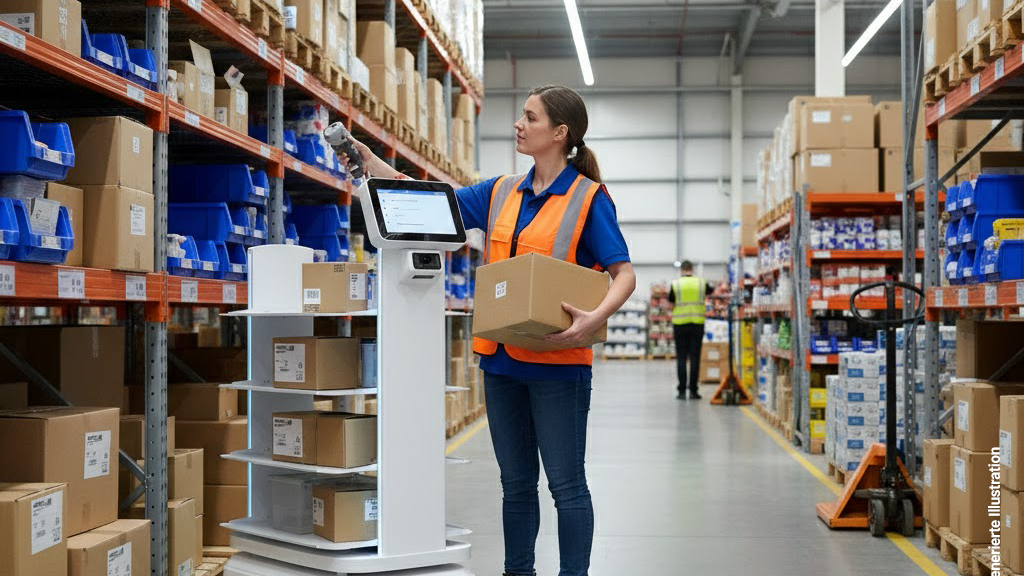
The company will demonstrate how its Descartes pixi WMS can be combined with assistance systems including autonomous mobile robots and pick-by-light technology. The demonstrations will focus on adapting warehouse processes without requiring a complete rebuild of existing operations.
The event takes place at Estrel Berlin on 23 and 24 June 2026, with Descartes exhibiting in Hall 2. Open, robotics-ready WMS capability is being positioned as a foundation for ecommerce operators seeking to scale automation while retaining process flexibility.
Ecommerce fulfilment is entering a more selective phase of automation investment. Operators are less interested in isolated robotics projects and more focused on systems that can be added to live operations, reduce labour pressure, improve picking performance, and protect service levels during demand volatility.
The warehouse management system increasingly decides whether automation performs well. Robots, light-directed picking, conveyors, and sortation all depend on task sequencing, stock accuracy, replenishment logic, and exception control. A poor execution layer can leave expensive automation underused or misdirected.
Ecommerce operations face a difficult mix of wide SKU ranges, variable order profiles, returns, promotions, and rising delivery expectations. AMRs and pick-by-light can improve speed and accuracy, but they must be coordinated with receiving, replenishment, packing, returns, carrier handover, and labour planning.
Adaptability is commercially important because many fulfilment centres cannot be shut down for major redesigns. Modular integration allows operators to add automation in stages, proving the value of each step before committing to wider deployment. That approach can be particularly useful for mid-market retailers that need productivity gains but cannot absorb the risk of a full facility transformation.
European warehouse technology demand is becoming more concentrated around practical deployment, as shown by IntraLogisteX expanding into Düsseldorf’s logistics market. WMS, robotics, materials handling, fulfilment technology, and supply chain software are increasingly being bought as connected systems rather than separate capital items.
Labour pressure remains a strong driver. Pick-by-light can reduce decision-making load, AMRs can cut unnecessary walking, and WMS logic can allocate work more consistently. The gains are strongest where technology reduces process friction rather than simply adding more screens or instructions to the warehouse floor.
Robotics-ready warehouses still need disciplined data and process foundations. Master data, inventory accuracy, slotting, replenishment rules, exception handling, and carrier cut-off discipline all influence whether automation adds value. Poor stock records or weak operational governance can turn robotics into a faster route to the same errors.
The strongest WMS platforms are becoming integration hubs, connecting warehouse automation with order management, carrier systems, labour planning, returns processing, and analytics. Retailers need that control layer because automation technologies will continue to evolve, and few operators want to lock their future warehouse strategy into a single hardware choice.
Descartes’ K5 demonstrations put the emphasis on that control layer. Warehouse management is no longer a back-office record of movements; in automated fulfilment, it determines how human labour, robotics, light-directed work, stock, and outbound transport function as one operating system.