IN Brief:
- Danfoss has completed a 22,500 sq m production and logistics facility in Tuchom, Poland.
- The site combines manufacturing, warehousing, distribution, and internal logistics.
- The facility supports European B2B markets and strengthens Danfoss’ Polish industrial footprint.
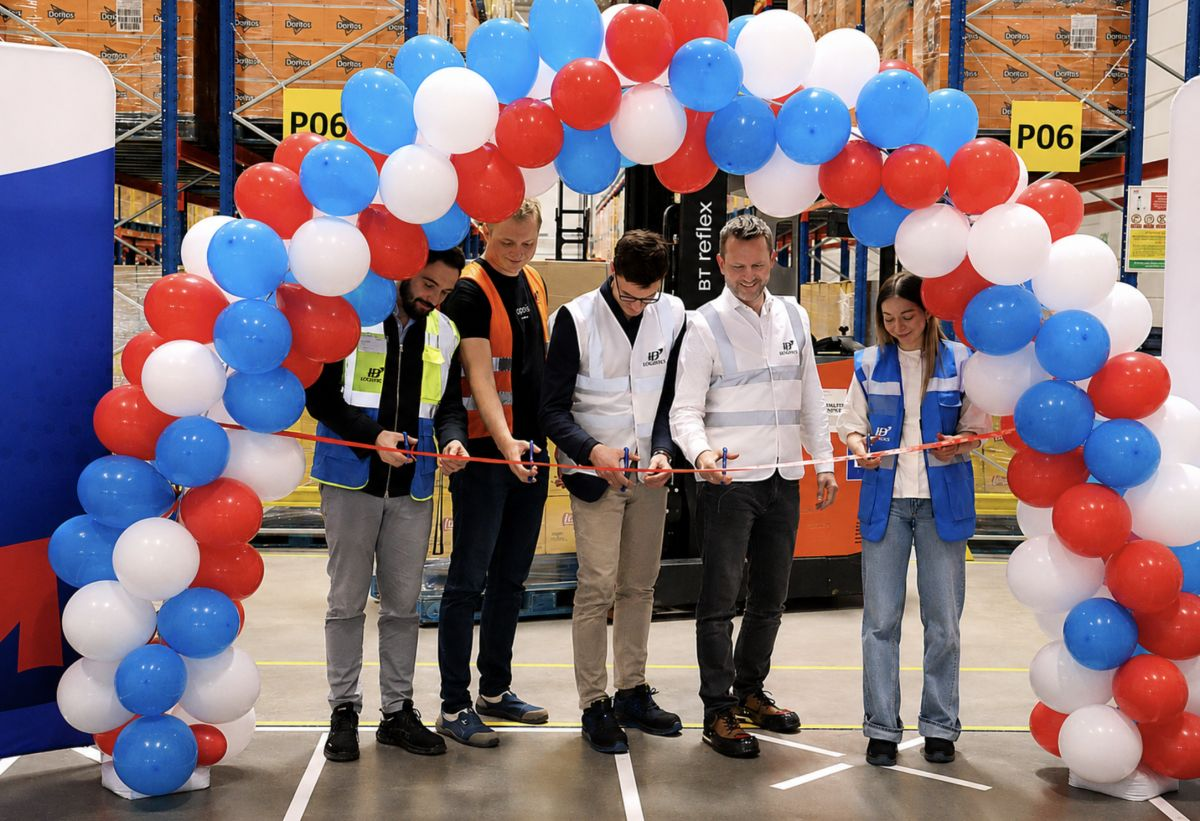
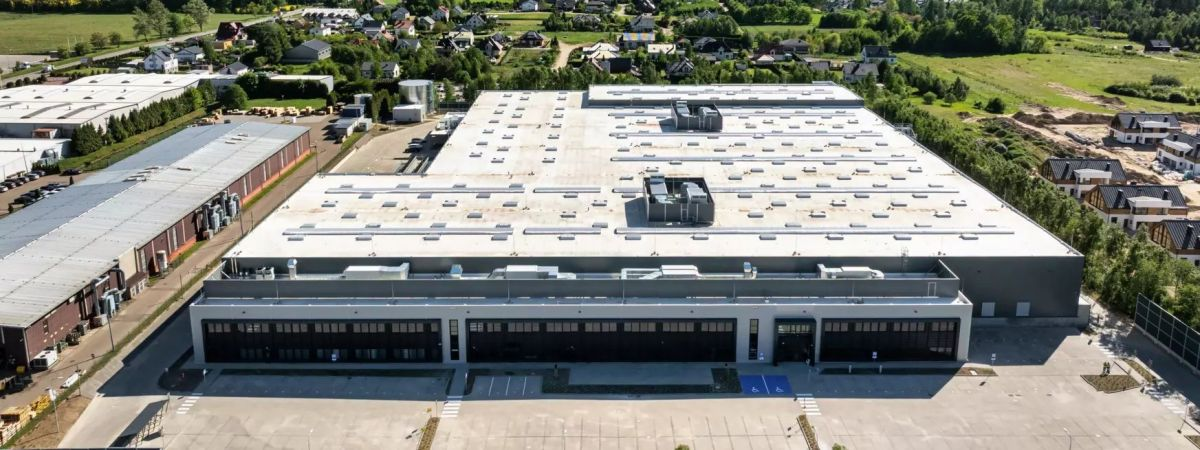
Danfoss has completed a bespoke 22,500 sq m production and logistics facility in Tuchom, Poland, bringing manufacturing, warehousing, distribution, and internal material flow into one integrated site.
The building was delivered by Panattoni BTS under a build-to-own model and has been configured around Danfoss’ production and distribution requirements in Pomerania. The facility is expected to accommodate around 500 employees and support B2B markets across Europe.
Danfoss is active in heating, cooling, industrial automation, and electric drives, giving the site a broad industrial logistics role. Rather than operating as a storage-only warehouse, the Tuchom building is designed to support production flow, internal logistics, goods handling, and outbound distribution from the same location.
Manufacturers are increasingly designing logistics into the factory environment from the beginning. Inbound material availability, line-side replenishment, internal movement, finished goods storage, packaging, and dispatch are all part of production reliability. When those activities are separated across multiple buildings or external storage points, the network can absorb space pressure but often loses speed and control.
The same manufacturing-led logistics approach is visible in Finland, where Sandvik is bringing a logistics hub closer to its Turku production operations to improve material flow and reduce off-site movement. Danfoss’ Tuchom site follows that logic in a Polish context, treating warehouse and distribution activity as an extension of industrial capacity.
Poland continues to strengthen its role as one of Europe’s most active manufacturing and logistics markets. Its position between western European demand and central and eastern European production networks gives occupiers access to skilled labour, road connectivity, supplier ecosystems, and competitive industrial real estate. Build-to-own and build-to-suit projects are particularly attractive where a company needs a facility aligned to long-term operational requirements.
The advantage of a combined production and logistics site lies in the reduction of friction. Fewer external movements can reduce double handling, improve inventory visibility, shorten factory lead times, and give planners a clearer picture of what can be produced, stored, and shipped. That becomes more important as customers expect faster fulfilment, greater transparency, and higher resilience from industrial suppliers.
Internal logistics is also becoming more technically demanding. Manufacturers need buildings that can support automation readiness, data systems, power requirements, employee movement, maintenance access, quality control, and safe handling of components and finished goods. A building that is technically suitable for storage may still be poorly suited to a production-linked logistics operation.
The Tuchom facility also reinforces the role of logistics property as a strategic asset. During supply disruption, the conversation often centres on suppliers, freight rates, and inventory levels. The physical estate determines how those decisions become operational reality: where materials are held, how quickly they can be staged, and whether goods can move through production without creating unnecessary delay.
For Danfoss, the site strengthens Polish production and European distribution capacity at a time when industrial companies are seeking more control over the points where supply, manufacturing, and customer service intersect. Tuchom gives the company an integrated base designed around those intersections, rather than a production site with logistics added later.