IN Brief:
- Sandvik is investing in a new logistics hub at its Turku load and haul equipment factory.
- The hub will replace parts of an off-site logistics flow currently located around 13km away.
- Ramp-up is expected after facility completion and operational system installation in September 2027.
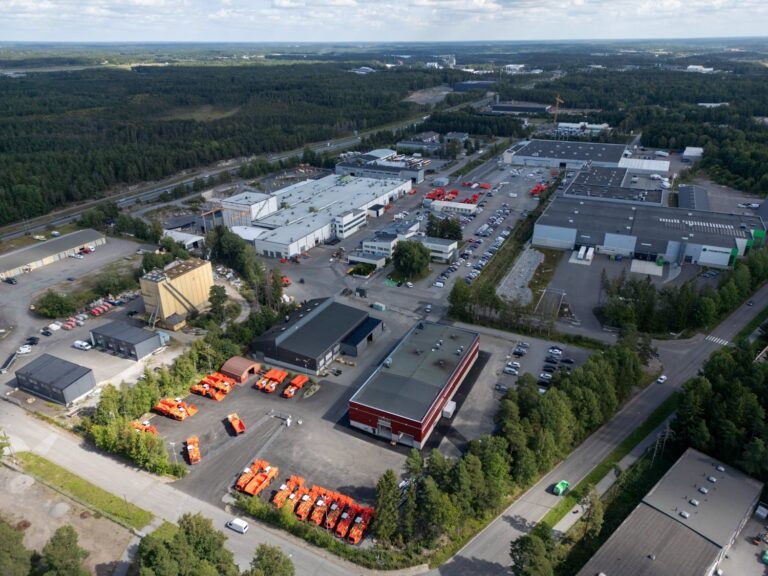
Sandvik is investing in a new logistics hub at its load and haul equipment factory in Turku, Finland, bringing key material flows closer to production.
The hub will replace parts of the current logistics flow located around 13km away at Turku harbour. By moving logistics activity closer to the factory, Sandvik expects to improve material flow, strengthen customer service, and support shorter factory lead times.
The Turku site manufactures underground load and haul equipment, including battery-electric and diesel machines. The factory forms part of Sandvik’s global mining equipment network, where delivery reliability is closely tied to mine planning, fleet replacement, and customer project schedules.
Wayne Scrivens, President, Load & Haul, Sandvik Mining, said: “Customer expectations for delivery reliability, flexibility and speed continue to increase. This investment strengthens our ability to serve customers with shorter lead times, more predictable deliveries and a more efficient end-to-end production flow.”
Scrivens added that the Turku factory plays an important role in Sandvik’s global load and haul offering, with the investment supporting manufacturing and logistics capability in Finland.
The new logistics hub is also expected to improve internal efficiency and create a safer working environment by reducing unnecessary transport, handling, and movement between separate locations. Construction will proceed in phases, with ramp-up expected after completion of the facility and installation of operational systems in September 2027.
Heavy equipment manufacturing depends on predictable material flow. Components can be large, expensive, safety-critical, and difficult to substitute at short notice. When a key part is late, assembly can slow or stop; when buffer stock is too high, space and working capital are tied up inside the factory network.
By placing logistics closer to production, Sandvik can reduce handovers between the harbour location and the factory, improve sequencing, and give planners better control over inbound material. The change also reduces the physical distance between storage, production, quality control, and assembly, which is particularly important when customer orders involve different specifications.
The approach fits a wider shift in industrial logistics. Manufacturing sites are increasingly being designed around flow rather than simply production footprint. Electrification, automation, digital product systems, and customer-specific configurations create more complex component requirements, and those requirements have to be reflected in warehouse and inbound logistics design.
The same infrastructure logic can be seen in DHL’s French logistics infrastructure programme, where new capacity is being positioned around industrial, healthcare, technology, and lower-emissions flows. Sandvik’s Turku project applies that thinking inside a manufacturing campus, using logistics investment to improve factory responsiveness.
Safety gains are also part of the operating case. Fewer transfers between remote locations can reduce exposure to vehicle movements, yard activity, manual handling, and repeated loading or unloading. In heavy equipment environments, removing unnecessary movement can protect both productivity and workforce safety.
Mining equipment demand is also changing as operators invest in battery-electric machinery, safer underground operations, and more data-enabled fleet management. That product shift increases the complexity of components moving into factories and parts moving through aftersales networks. Logistics systems must be able to support heavier technical content without adding delay.
For equipment manufacturers, that connection between logistics and production is becoming harder to separate. Factory performance now depends on how quickly parts can be sequenced, checked, delivered to the line, and adjusted when customer requirements change.
Sandvik’s Turku investment therefore strengthens the factory at a structural level. The hub is not simply a storage building; it is part of a redesigned production flow intended to make material movement, assembly, and customer delivery more predictable.