IN Brief:
- Victoria Pass has remained closed since structural instability emerged in March.
- Seymour Whyte will build an independent bridge above Mitchell’s Causeway.
- The Great Western Highway should reopen during the second quarter of 2027.
Transport for NSW expects the Great Western Highway at Victoria Pass to remain closed until the second quarter of 2027 while a new bridge is constructed above the damaged Mitchell’s Causeway.
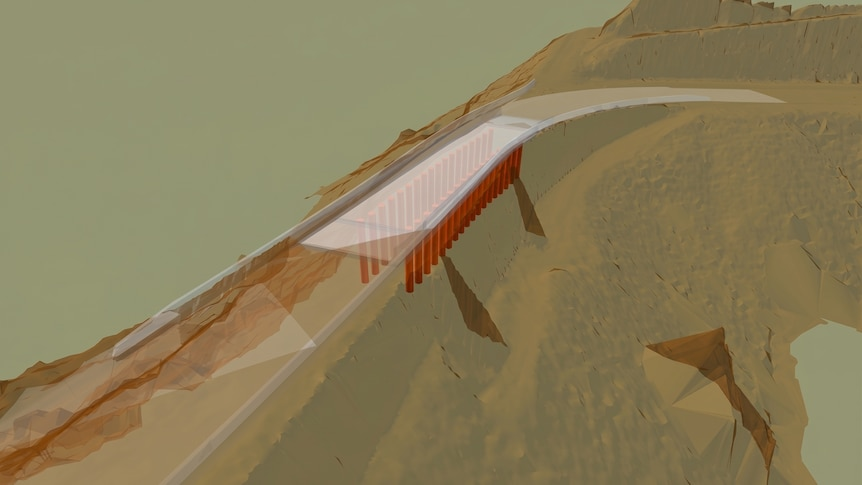
Seymour Whyte has been appointed to deliver the replacement through an accelerated procurement process, with major construction beginning in July. The design retains the highway’s existing alignment while allowing the convict-built causeway beneath it to be stabilised and preserved.
Deep piles anchored into stable bedrock will support a new bridge deck independently of the old masonry structure. Grouting and stabilisation work can consequently continue below the live roadway once the replacement opens, while the design retains scope for an additional traffic lane in a later development phase.
The Victoria Pass section closed in March after engineers identified serious cracking and instability within the 194-year-old crossing. Its loss removed the principal road connection between Sydney, the Blue Mountains, Lithgow, Bathurst, and much of western New South Wales, forcing heavy vehicles onto longer and less efficient alternatives.
Around 12,000 vehicles used the route each day before the closure, including freight serving farms, manufacturers, retailers, construction projects, and regional distribution operations. Detoured journeys require additional fuel and driving hours, while road geometry, vehicle restrictions, congestion, and more limited overtaking opportunities reduce schedule certainty.
Longer routes also alter fleet productivity, because a vehicle spending more time on one movement completes fewer trips within the same operating period. Carriers must balance driver-hours rules, depot cut-offs, customer booking slots, and the availability of vehicles suitable for the alternative roads, particularly where larger combinations face route restrictions.
Warehousing and inventory decisions have adjusted alongside transport plans. Businesses west of the Blue Mountains have less certainty over inbound replenishment and outbound collection, encouraging some operators to increase safety stock, bring deliveries forward, or reserve additional storage. Those measures protect service, although they absorb working capital and warehouse capacity.
Additional traffic through Lithgow and surrounding roads has shifted disruption into communities never designed to handle the replacement freight flow. Queues, road wear, noise, and more complicated access to local premises have accompanied the commercial costs borne by carriers and cargo owners.
The NSW Government has expanded assistance for affected businesses and communities, including grants of up to A$25,000 for some of the hardest-hit operators. Financial support may offset part of the immediate loss, but it cannot restore the journey time, vehicle productivity, or route capacity removed from the network.
Regional freight corridors often depend on a small number of bridges, mountain passes, tunnels, and junctions whose failure produces effects far beyond the asset itself. Structures built for an earlier transport era can appear adequate under routine conditions, yet provide little redundancy when engineering concerns require an extended closure.
Private investment is meanwhile adding significant warehousing and industrial capacity elsewhere in the state. Stockland and M&G have expanded their Australian logistics-property partnership, while Western Sydney’s A$1bn freight district is bringing further manufacturing, storage, and distribution development to the Aerotropolis.
Modern buildings increase storage density and handling capacity, but their performance remains tied to the roads, rail terminals, ports, and bridges connecting them. An automated distribution centre cannot recover capacity lost at a critical crossing, while additional inventory can compensate for an unreliable route only for a limited period.
With reopening still several operating cycles away, carriers will need to treat the detour as a medium-term network condition rather than a temporary exception. Route costs, fuel assumptions, customer commitments, driver rosters, maintenance schedules, and vehicle allocation should all reflect disruption continuing through seasonal peaks and changing agricultural demand.
Shippers can reduce uncertainty by sharing forward order information, separating urgent consignments from freight suitable for consolidation, and identifying loads that require vehicle configurations restricted on alternative routes. Delivery windows and contract assumptions may also need revision where existing service levels were built around the closed highway.
The replacement bridge provides a more durable answer than repeated repairs to a structure carrying modern freight volumes it was never designed to support. Until the new deck opens, Victoria Pass will continue demonstrating how the condition of one ageing asset can reshape transport economics across an entire regional supply network.