IN Brief:
- Amazon is proposing a four-million-square-foot automated operations facility in Holbrook, New York.
- A separate 1.2-million-square-foot regional distribution centre is planned for Terrell, Texas.
- The projects combine large inventory nodes with a wider shift towards robotics and smaller facilities positioned closer to demand.
Amazon is planning approximately 5.2 million ft² of new logistics capacity across New York and Texas, pairing a four-million-square-foot operations facility with a 1.2-million-square-foot regional distribution centre.
The larger proposal would be developed at Holbrook on Long Island, New York, where plans have been submitted for what would become Amazon’s largest operations facility in the area. Investment has been estimated at around US$1bn, with approximately 1,000 full-time roles anticipated once the building becomes operational.
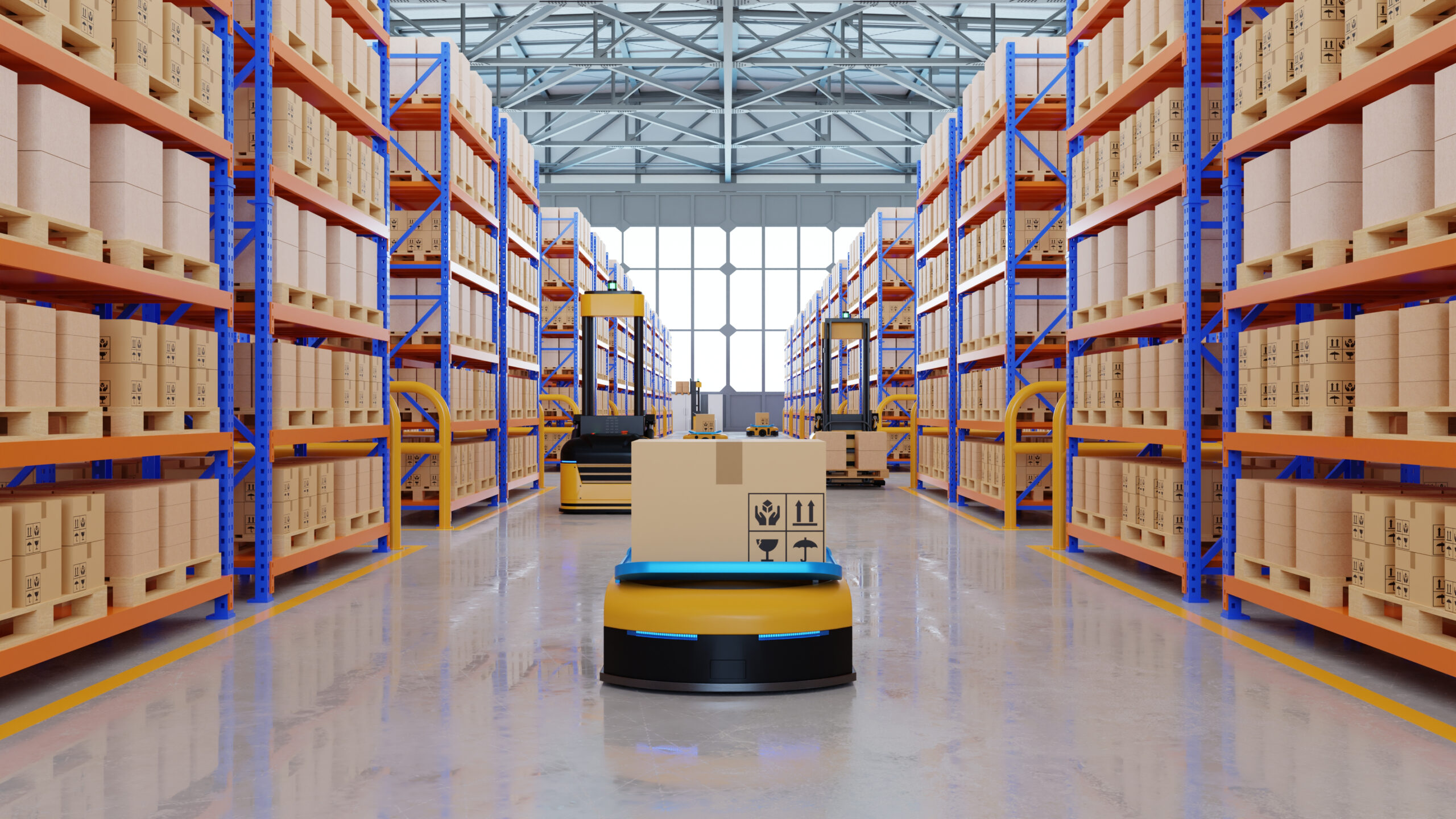
Advanced robotics are expected to form a central part of the Holbrook site, although its final equipment configuration has not yet been detailed. Amazon’s wider fulfilment network already uses mobile robots, robotic storage, computer vision, automated sortation, robotic arms, and software that coordinates machine fleets with warehouse workflows.
A second project in Terrell, Texas, covers approximately 1.2 million ft² and includes a regional distribution warehouse alongside primary and secondary guard buildings. State filings place construction between August 2026 and August 2027.
The two facilities are likely to serve different network functions, with a very large operations building providing inventory depth and high-volume processing while a regional centre supports onward sorting and distribution towards smaller fulfilment and delivery locations.
Scale and proximity are developing together
Large buildings remain integral to Amazon’s network even as the company positions smaller automated facilities closer to demand. A 248,687ft² robotics-led facility planned in Georgetown, Texas, includes specialist storage, cold areas, and sortation space intended to support faster local fulfilment.
The two formats address different inventory problems. Regional buildings can hold a wider assortment and consolidate inbound deliveries, while smaller sites position selected fast-moving goods close enough to support same-day or rapid delivery.
Operating both effectively requires precise inventory placement because stock held in the wrong node may travel through additional buildings, create split shipments, or miss a delivery promise despite being available elsewhere. Forecasting must determine location as well as overall quantity.
Seasonality, local demand, supplier lead time, product dimensions, storage cost, returns, and delivery commitments all influence that decision. A high-volume product may justify duplication across several nodes, whereas a slower item may be held centrally and moved only after an order is received.
The Holbrook proposal will create substantial demand for utilities, roads, labour, and maintenance capability. Robotics, conveyors, charging, computing, lighting, heating, ventilation, and fire systems require resilient power and data connections, while large daily volumes of trailers and employees need suitable access.
Automation alters labour requirements without removing them, increasing demand for engineers, maintenance technicians, inventory controllers, systems specialists, safety teams, and supervisors able to manage machine-led workflows. Exception handling remains particularly dependent on human judgement when damaged goods, missing stock, unsuitable packaging, or system conflicts interrupt the standard process.
Common automation raises shared dependencies
Amazon has deployed more than one million robots across its global operations, while a €10bn European robotics and automation programme is extending systems including Proteus mobile robots, STARK tote handling, and Vulcan robots capable of sensing contact.
Common technology platforms allow software, engineering knowledge, spare parts, and operating practices to be shared across buildings. They also create common dependencies, since a control-system defect, cyber incident, communications failure, or component shortage can affect several sites using the same architecture.
Resilience must therefore extend into the automation layer through redundant communication, recoverable software, spare-parts availability, maintenance access, fault isolation, and documented manual procedures. A large building processing tightly connected workflows can lose capacity quickly when one subsystem blocks the next.
The projects will also influence surrounding labour and property markets. A four-million-square-foot facility can absorb substantial construction resources, utility capacity, transport services, and employees, tightening availability for other industrial occupiers nearby.
Road planning will require equal attention because large regional buildings concentrate inbound trailers and outbound departures around relatively few junctions and operating windows. Wider inventory consolidation may reduce duplication while increasing local traffic intensity.
Amazon’s New York and Texas plans continue the physical expansion of a network increasingly shaped by robotics, data, and regional inventory placement. The buildings provide scale, but their output will depend on power, labour, maintenance, transport access, and forecasting keeping pace with the additional floor area.