IN Brief:
- The Yuan He Kou arrived at Astakos on 22 November during a trial of the Greek gateway.
- The vessel left Shenzhen on 3 November carrying 4,898 electric and hybrid vehicles.
- The proposed distribution network includes onward feeder services to Zeebrugge, Koper, and Valencia.
COSCO Shipping Specialized Carriers has completed its first call at the western Greek port of Astakos under a vehicle shipping pilot from southern China. The programme will test whether the facility can serve as an intermediate distribution point for automotive cargo destined for several European markets.
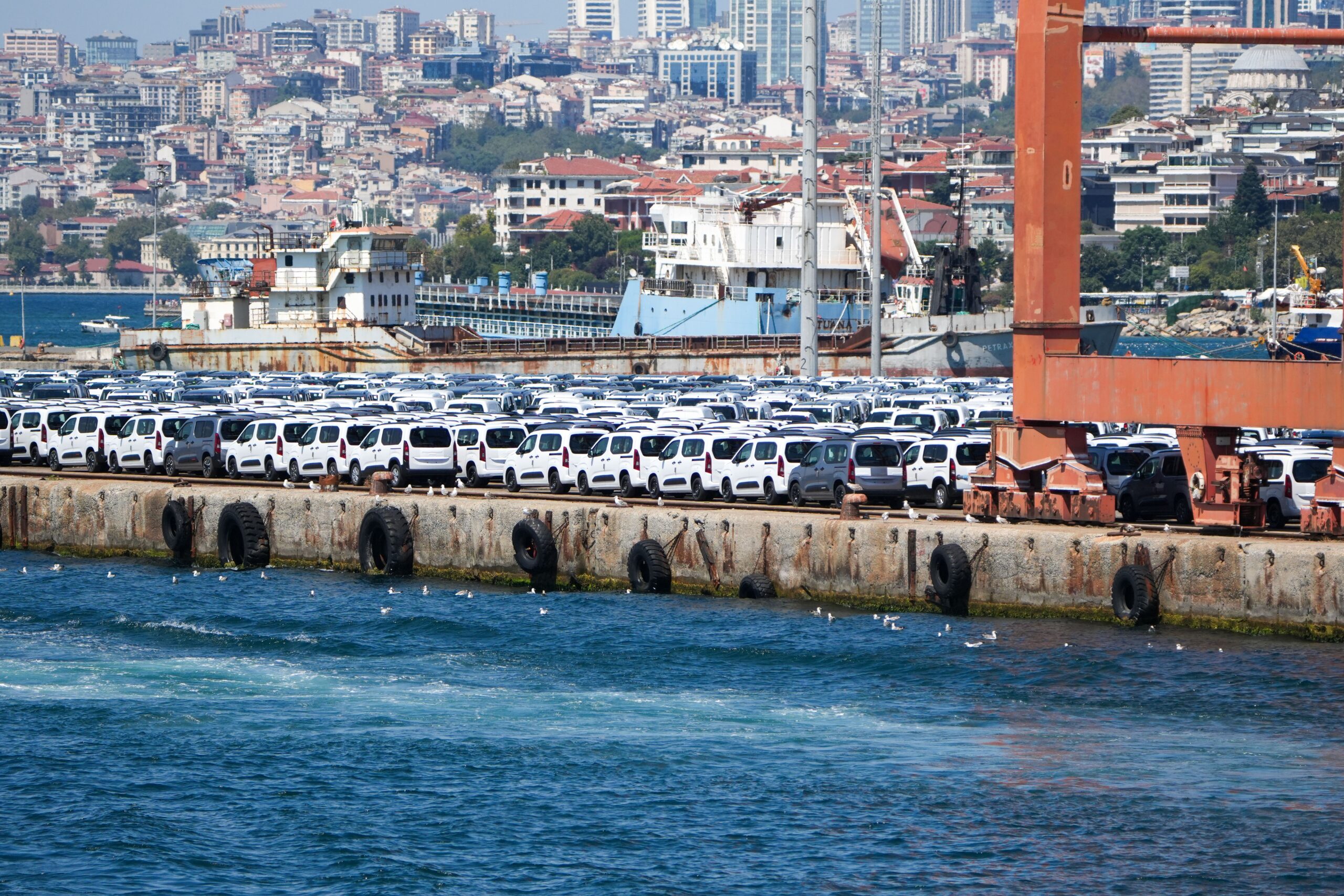
The Yuan He Kou, a pure car and truck carrier with nominal capacity equivalent to 7,000 passenger cars, reached Astakos on 22 November. It departed Xiaomo Port near Shenzhen on 3 November carrying 4,898 Chinese-manufactured electric and hybrid vehicles. Vessel tracking records indicate that the ship subsequently left Astakos on 24 November.
The voyage forms part of an initial four-vessel programme. COSCO’s planned distribution arrangements include feeder connections from Astakos to Zeebrugge in Belgium, Koper in Slovenia, and Valencia in Spain. The carrier has not announced a permanent service frequency or confirmed the number of vehicles that will pass through the Greek port annually after the trial.
The use of an intermediate port separates the long-distance voyage from the distribution of vehicles to their destination markets. A large car carrier can consolidate shipments from China into a single maritime movement, after which smaller vessels can transport portions of the cargo through regional services. The alternative is for the deep-sea vessel to undertake several calls itself, increasing the time needed to complete its rotation.
Pure car and truck carriers accommodate rolling cargo on enclosed decks connected by ramps. The sequence in which vehicles are loaded determines how easily individual groups of cars can be discharged at successive ports. Loading plans must also account for vehicle weight, dimensions, deck strength, and the requirements for securing the cargo during the voyage.
The stated capacity of 7,000 cars is a reference measure, rather than the number of every type of vehicle that can be carried. The 4,898 units loaded in Shenzhen cannot therefore be treated as a definitive indication of how much deck space remained available or whether the voyage met its commercial utilisation target. Larger vehicles can require more space than the reference model, while weight and deck height may restrict placement.
At a transshipment terminal, vehicles discharged from the deep-sea ship may need to remain in secure storage compounds while awaiting their feeder connections. Staff must identify each vehicle, verify its destination, and allocate an appropriate parking location. Repeated movements within the compound add handling time and create additional opportunities for damage, making the configuration of storage areas important to terminal efficiency.
A large arriving shipment can occupy substantial storage space if its onward vessels are not ready to load. Conversely, a feeder arriving before its cargo is available may spend additional time alongside or depart with unused capacity. Coordinating both services is therefore necessary to preserve any economic advantage gained by consolidating the original long-distance voyage.
The mix of electric and hybrid vehicles also requires appropriate procedures for inspecting, storing, and transporting battery-powered cargo. Terminal and vessel operators must establish how vehicles showing signs of damage or other irregularities will be separated from the normal handling sequence. The battery condition, the vehicle’s technical characteristics, and applicable carrier requirements influence the treatment of individual units.
Vehicle identification records need to remain consistent across the transfer from the deep-sea carrier to the terminal and subsequent feeder operator. A vehicle identification number allows a particular unit to be matched against shipping documents and the customer’s distribution instructions. Condition records taken at each handover can also help establish when damage occurred if a discrepancy is discovered further along the transport chain.
Astakos offers a western Greek location for Mediterranean and Adriatic shipping connections. Koper provides access to central European distribution markets, while Valencia and Zeebrugge serve substantial vehicle handling networks in their respective regions. Whether the proposed distribution pattern reduces overall transport costs will depend on the number of vehicles destined for each location and the frequency and pricing of the feeder services.
Other European ports are developing dedicated vehicle infrastructure, including Motril in Spain, where Noatum recently secured a 15-year concession covering its existing automotive operation. The availability of several handling gateways gives shipping companies different options for establishing regional distribution networks, but each requires suitable maritime and inland connections.
The first Astakos call establishes that a vessel has reached and departed the port under the pilot. The amount of cargo discharged, measured vehicle handling times, storage utilisation, and results of the remaining vessel calls have not yet been published. Those figures will provide the basis for determining whether the new Greek transshipment operation can support a regular commercial service.