IN Brief:
- Essity and IPP have introduced display pallets to support rising Lidl UK demand.
- IPP supplies more than two million pallets per year for Essity.
- The collaboration supports promotional peaks, pooled pallet management, and lower-impact retail logistics.
Essity has collaborated with IPP to introduce display pallets supporting increased demand from Lidl UK.
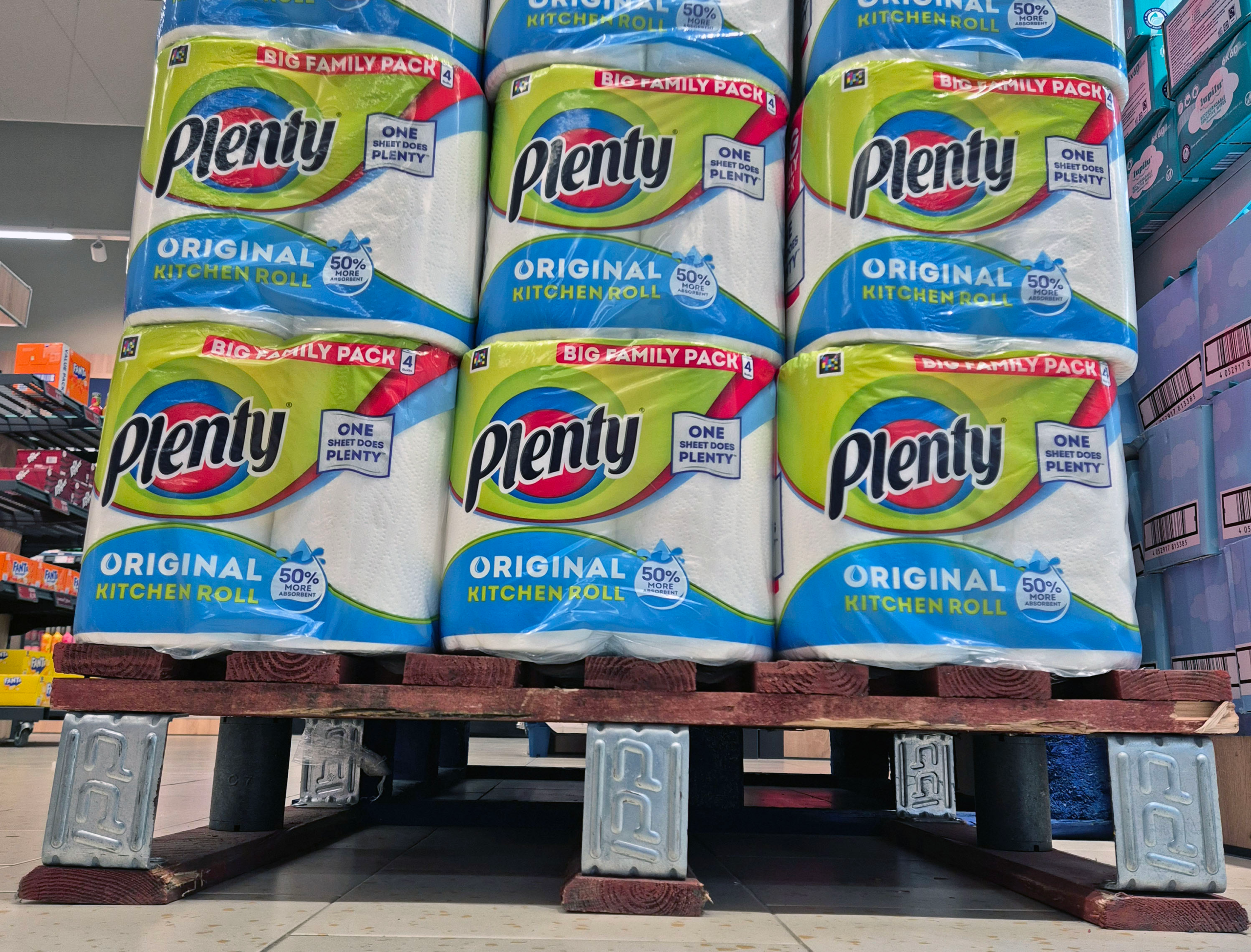
The hygiene business and the European pallet pooling specialist have worked together for nearly two decades, with IPP supplying more than two million pallets per year for Essity. Essity owns tissue and paper towel brands including Cushelle, Tork, and Plenty.
The partnership has now been extended to include display pallets for Lidl aisles, using IPP’s wooden Dusseldorfer pallets. The format is designed to integrate into retail supply chains while supporting in-store display, easier handling, and product growth during promotional peaks.
Display pallets are particularly useful in fast-moving retail models because they reduce handling between distribution, store replenishment, and point-of-sale presentation. For bulky tissue and paper products, the ability to move goods through the supply chain and present them directly in store can improve replenishment speed while reducing the work required from store teams.
Essity is using the pallets to support growing Lidl demand and promotional activity. Within IPP’s pooling network, pallets are maintained and managed to reduce environmental impact and improve transport and storage efficiency across the supply chain.
Paul Vale, Essity’s UK logistics manager, said: “Our long relationship with IPP is down to its excellent service, agility and transparency, along with trust and reliability. It has an in-depth understanding of our business and can respond and react as and when we need.
“IPP is on hand to provide support with promotional peaks and has been instrumental in helping launch our display pallets in Lidl.
“It’s been an exciting year so far for us at Essity, and we’re glad to have a reliable supply chain provider which continues to invest in solutions to drive performance.”
IPP has also established an operational presence at two of Essity’s largest UK manufacturing sites in Trafford and Prudhoe. The arrangement is designed to mitigate costs, reduce CO2 emissions, and support smoother operations. Work between the companies includes incentivising transporters and identifying empty running legs where additional Essity products can be decanted and trans-shipped.
Andy Maddock, regional managing director for IPP UK&I, said: “IPP’s long relationship with Essity is testament to our quality and dependable supply, and ability to grow alongside the company.
“We’re excited to have helped Essity provide display pallets in budget supermarkets this year and renew our contract. We look forward to seeing where the future takes our partnership.”
The collaboration lands in a grocery logistics market where warehouse scale, store availability, and reusable assets are being pushed harder. Aldi’s £500m Bardon distribution centre showed how discounters are continuing to invest in high-throughput grocery infrastructure, while Bakers Basco’s work on reusable basket and dolly control underlined the operational value of keeping returnable assets in circulation.
Pallet pooling sits inside the same discipline. Poorly managed pallet flows create avoidable transport, asset loss, dwell time, and manual intervention. Well-managed pooling gives manufacturers and retailers more reliable load carrier availability while supporting lower-waste distribution models.
For FMCG supply chains, the pallet is not just a platform underneath the product. It shapes transport density, warehouse handling, store execution, reverse logistics, and promotional reliability. Essity and IPP’s Lidl collaboration strengthens that role by linking reusable pallet management directly with retail display and demand growth.