IN Brief:
- Euroports Rauma is joining Portchain Connect to exchange arrival schedules and container move counts with shipping lines.
- Carriers and terminal planners can agree berth windows through recorded digital proposals and counterproposals.
- Portchain reports more than 200 connected terminals and six major container carriers; measured results at Rauma have not been released.
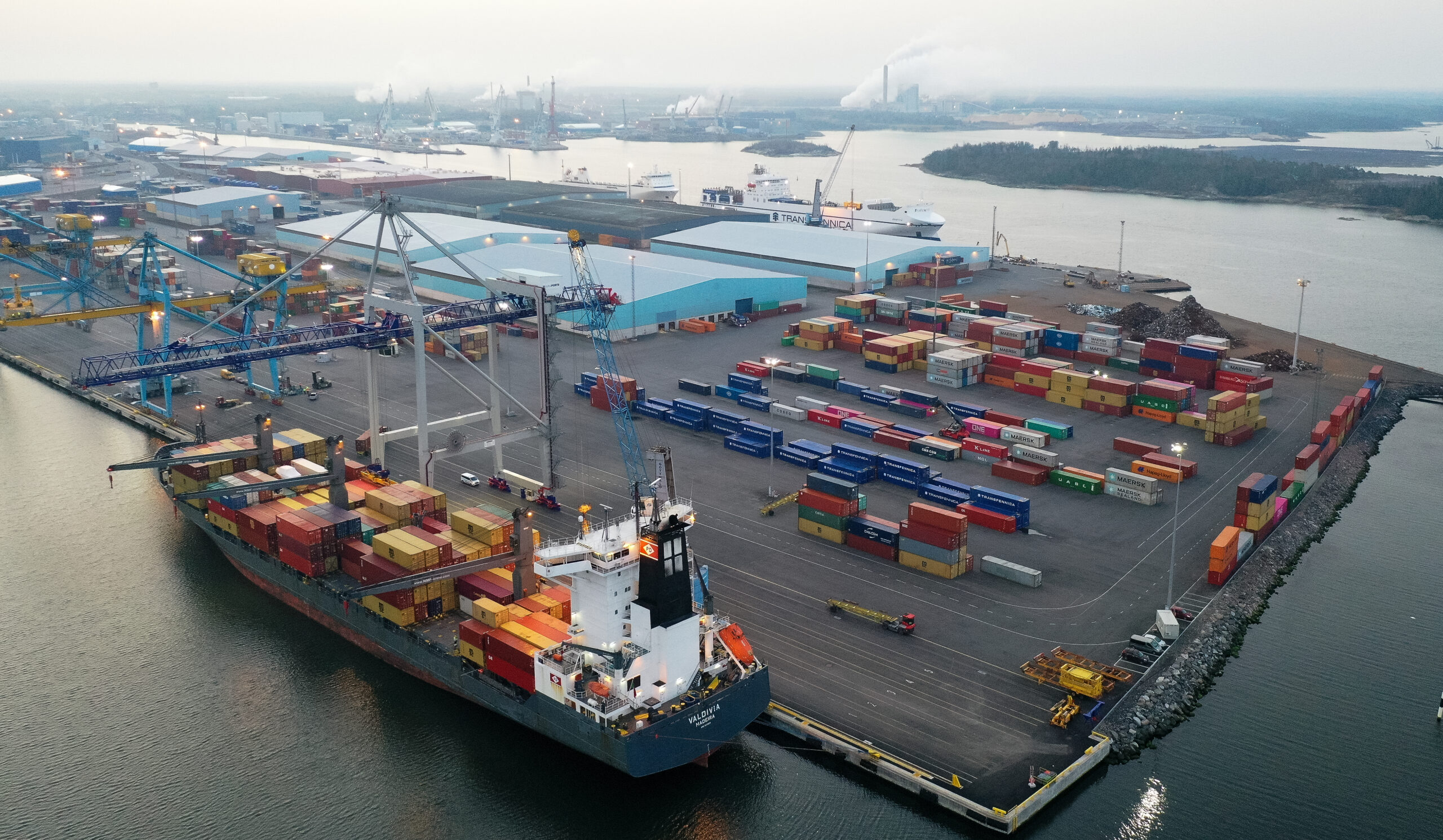
Euroports is joining Portchain Connect at its container terminal in Rauma, Finland, establishing a shared channel for berth coordination with shipping lines. The 12 November agreement will allow carrier systems to transmit schedule changes and expected container move counts directly to the terminal. Euroports can then accept a proposed arrival window or return a revised berth proposal through the same platform. The change concerns the exchange and agreement of operational information; it is not an expansion of the terminal’s physical berth capacity.
Rauma is a major outlet for Finland’s forest industry, with container and break bulk handling of paper, pulp and sawn timber alongside fertilisers, minerals and project cargo. Portchain describes approximately four million tonnes of annual cargo handled by the terminal operation and a 12-metre-deep shipping channel. The software agreement concerns the container terminal’s scheduling relationships, where changes to a vessel’s estimated arrival and the number of containers to be handled affect the berth and crane programme.
Berth planning starts with an estimated vessel arrival, the handling workload expected during the call, the length of quay required and the cranes or other equipment available for the operation. These inputs are often revised as vessels encounter congestion, weather or changes to upstream schedules. A late arrival can affect other ships allocated to the same berth, while an early arrival may offer little benefit if the quay or loading programme is not ready.
Portchain Connect is intended to make schedule changes available to both sides through a common workflow. Carriers can send updated estimated arrival information and counts of containers to be moved. The terminal can compare those figures with its berth plan, then accept the timing or propose a different slot. Portchain calls the exchange a digital handshake, a term describing a recorded alignment between the carrier and terminal rather than a guarantee that the vessel will arrive at the agreed minute.
The number of container moves affects the time for which a berth and cranes must be reserved. A vessel with substantially more lifts than originally declared may remain alongside for longer, delaying a subsequent call even if its arrival time is accurate. Earlier access to revised move counts allows planners to assess the work programme before the ship arrives. The benefit depends on the quality of carrier data and on the terminal retaining some room to alter labour, equipment and berth assignments.
A shared scheduling platform does not remove constraints at the quay. Another vessel may still occupy the berth, a crane may be out of service, or weather and safety restrictions may limit handling. The practical improvement comes when a schedule change is visible early enough for terminal planners and carriers to agree a workable alternative. That can reduce contradictory plans and repeated messages, provided the estimated arrivals and move counts supplied by carriers are maintained accurately.
Shared systems introduce their own information-management obligations. The vessel identifier, planned call, time zone and operating assumptions must match between the carrier and terminal records. Where one party has updated an expected arrival and the other is working from an earlier estimate, a seemingly minor data difference can cause a missed transfer or an unrealistic crane allocation. Reliable interfaces and clear responsibility for confirming the final agreed slot are therefore central to day-to-day use.
Tomi Rautio, Managing Director of Euroports Finland, said earlier access to reliable operational information would support the terminal’s planning and response to schedule changes. His assessment concerns improved coordination, rather than a measured change to vessel turnaround. Euroports and Portchain have not released a reduction in waiting time, berth conflicts or crane idle time from the Rauma deployment, and no date has been provided for the connection of every carrier calling at the terminal.
Portchain reports that Connect already links more than 200 terminals and six major container carriers, representing more than 40% of global terminal capacity. That scale provides the potential to exchange similar scheduling data across multiple ports without developing a separate bilateral arrangement each time. Participating terminals still have different physical equipment, working practices and available berth windows. The common data connection cannot make their local operational plans identical.
StormGeo acquired Portchain in October, combining voyage intelligence with port scheduling technology. The Rauma agreement is a separate customer deployment: the Finnish terminal is adopting the berth planning platform for its own shipping line relationships. Data from a terminal may also be useful to voyage planners considering when a ship should arrive, but the customer agreement does not specify a new vessel speed optimisation programme or measured fuel saving.
Better berth alignment can help a terminal avoid concentrating demands for equipment and labour in periods when several ships are due together. A carrier may also gain earlier notice that its requested arrival cannot be accommodated, allowing it to reassess the call plan. These are operational possibilities, not quantified results from the new arrangement. No project cost, contract length or guaranteed service level was disclosed in the 12 November information.
Euroports Rauma will now incorporate the shared schedule and move-count exchanges into day-to-day berth planning with participating shipping lines. The immediate test will be whether both parties act on the same updated arrival window and whether changes are resolved before they generate avoidable queues. Contract value, implementation milestones for individual carriers and measured terminal results have not been published. The confirmed operational development is the agreement to join Portchain Connect.