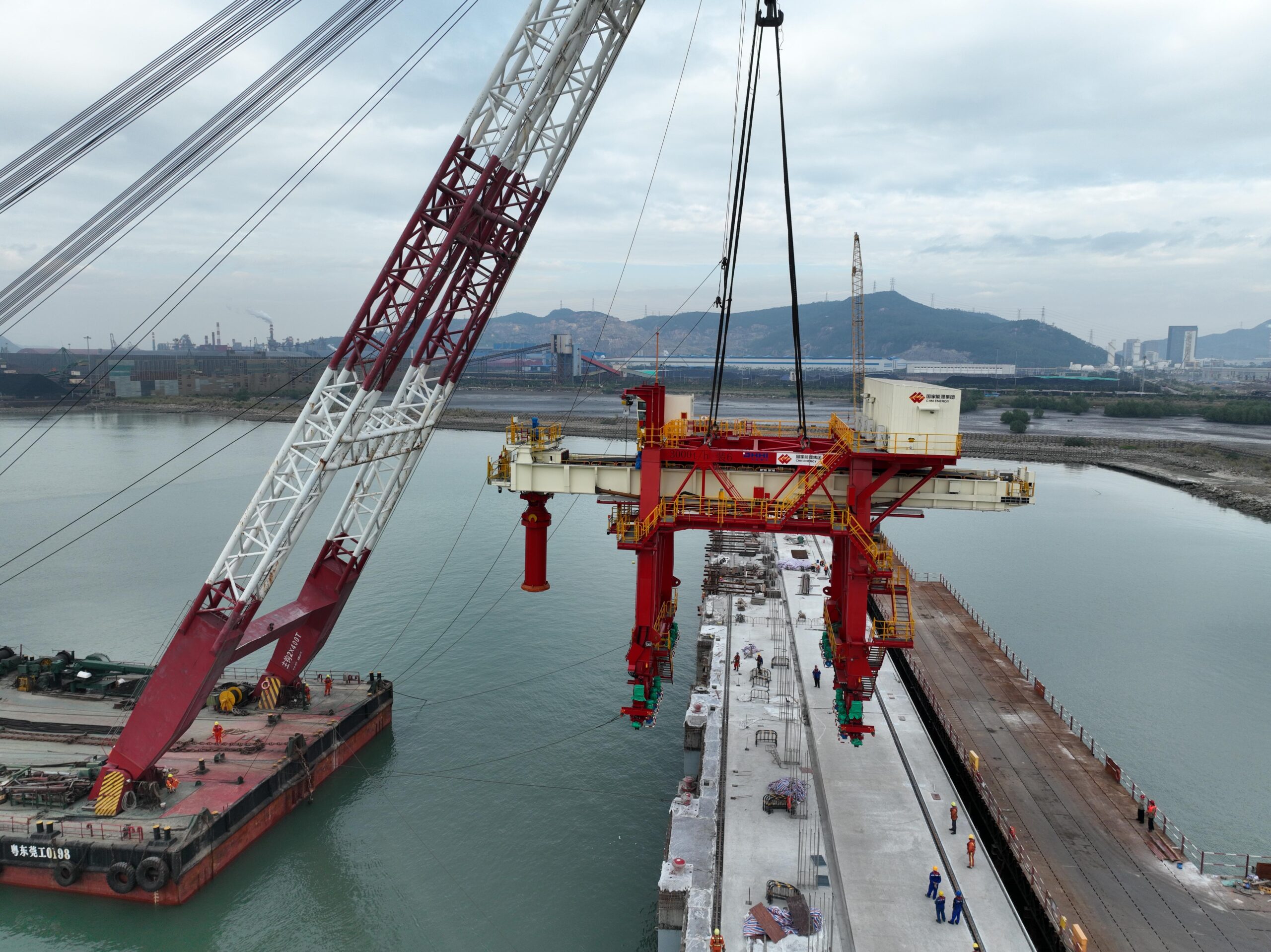
IN Brief:
- China Energy Investment Corporation confirmed final acceptance of the Guoneng bulk terminal at Zhuhai on 9 November.
- The project adds one berth for 100,000-dwt unloading vessels and two 5,000-dwt loading berths.
- The facility provides 17.5 million tonnes of additional annual design throughput and supports emergency coal reserves.
China Energy Investment Corporation has completed final construction acceptance for the Guoneng bulk cargo terminal at Zhuhai’s Gaolan Port in Guangdong, adding 17.5 million tonnes of designed annual coal handling capacity. The inspection concluded on 9 November and the operator confirmed the milestone on 12 November. The project comprises one 100,000-deadweight-tonne unloading berth and two 5,000-deadweight-tonne loading berths.
The new facilities support the Zhuhai national emergency coal reserve base and the movement of fuel across the Pearl River Delta. Acceptance followed checks covering construction quality, safety, firefighting systems, environmental requirements and project records. The owner says the works meet the conditions for entering operation; no actual annual throughput figure has yet been reported for the new berths.
The berth configuration indicates a cargo transfer function linking larger inbound coal carriers with smaller outbound vessels. An unloading berth capable of receiving ships in the 100,000-dwt class can concentrate incoming deliveries from longer-distance routes. The two smaller loading berths allow coal to be dispatched in different parcels, with the timing and volumes dependent on storage availability, vessel schedules and onward demand.
Deadweight tonnage describes a vessel’s carrying capacity, including cargo, fuel, stores and other loads, rather than the number of tonnes a berth moves in an hour. Berth classification also does not establish the size of every ship that will call. Actual handling rates depend on unloading equipment, conveyors, stockyard operations, loading systems and the time needed to berth, work and release each vessel.
The 17.5 million tonnes represent added annual design handling capacity at the Guoneng project. Completion also takes the wider Zhuhai port’s stated annual bulk handling capability above 100 million tonnes, according to the local port development account. That second figure covers several port facilities and cannot be treated as cargo already transported in 2026.
The engineering challenge for a coal transhipment hub lies in matching inbound ship unloading to temporary storage and outbound transport. A stockyard can provide a buffer when vessels arrive in large batches and smaller receiving vessels are not yet available. But accumulated coal occupies land, requires control of stockpile movements and can complicate blending and traceability if parcels from different sources must be kept separate.
Conveying and transfer arrangements also affect reliability. Material must pass between unloading equipment, belt conveyors, storage systems and loading points, with dust containment and the management of spillage forming part of safe bulk handling. The owner confirms completion of environmental and safety checks but has not identified the capacities or suppliers of individual conveyors, stackers, reclaimers or dust control systems at the site.
Coal distribution facilities serving emergency reserves have different operating demands from terminals dedicated solely to regular commercial throughput. A reserve may need to hold stock for extended periods and then release material at speed when supply conditions change. Handling capability, storage inventory, dispatch routes and operating procedures must therefore be considered together rather than measuring resilience by berth capacity alone.
The owner says the project reached final acceptance four months after handover acceptance, 52 days ahead of its internal completion target. The same development programme includes rail loading works and upgrades to berths numbered four to eight, connecting the new project with other routes through the port complex. The acceptance report does not quantify how much additional coal those rail facilities can move.
Local project reporting places the investment at approximately CNY1.06bn. The design comprises large-vessel unloading and smaller-vessel loading berths, but no detailed cost allocation has been provided for conveyors, stockyard equipment, ancillary works or environmental systems. An investment figure and the stated capacity indicate the scale of the infrastructure, rather than an independently measured reduction in coal transport costs.
Port infrastructure of this scale is only one component of effective coal delivery. Rail and coastal shipping capacity, customer storage, inventory policy and the availability of receiving berths all influence the tonnage that can ultimately be distributed. If multiple vessels arrive close together, ship queuing or limitations further inland may still prevent the nominal annual capacity from being reached.
With the construction acceptance complete, the operator can move towards routine use of the new berths. Subsequent cargo records should reveal how the site divides movements between incoming carriers, smaller coastal vessels and any inland distribution connections, and whether the expected capacity can be sustained alongside emergency stockholding requirements.