IN Brief:
- Hapag-Lloyd and Seaspan have completed the first vessel conversion under their methanol retrofit programme.
- The 10,100 TEU Seaspan Yangtze has been upgraded to a dual-fuel engine capable of operating on methanol.
- The five-vessel programme is valued at about $120m and supports lower-carbon container shipping options.
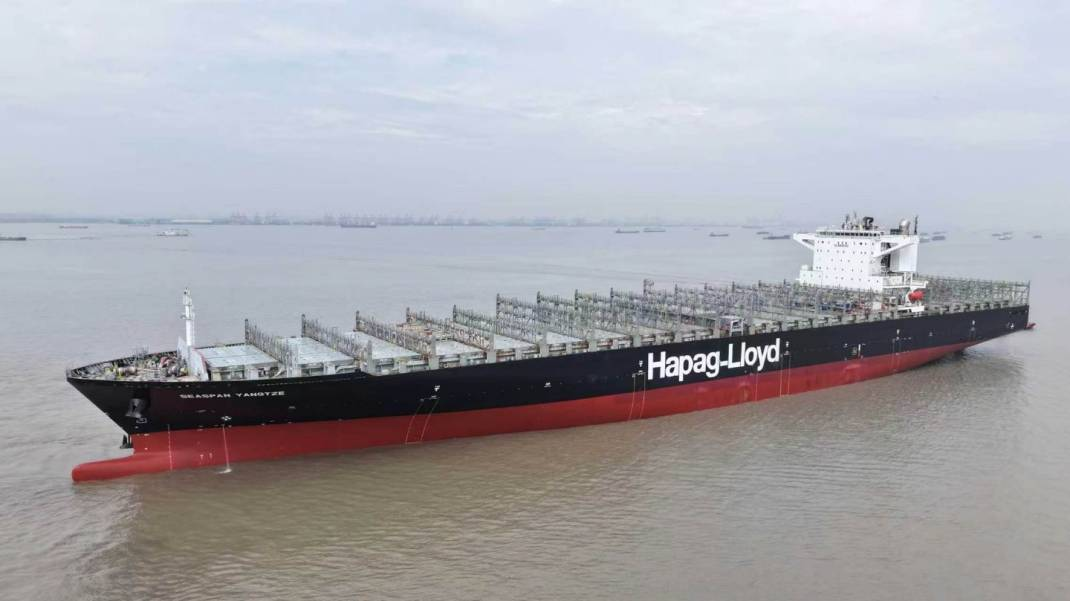
Hapag-Lloyd and Seaspan have completed the first vessel conversion under their joint methanol retrofit programme, upgrading the 10,100 TEU Seaspan Yangtze to a dual-fuel engine capable of operating on methanol.
The vessel has been converted from a conventional MAN S90 engine as part of a five-ship programme involving Hapag-Lloyd, Seaspan Corporation, and Everllence. The remaining vessels scheduled for conversion are Seaspan Amazon, Seaspan Ganges, Seaspan Thames, and Seaspan Zambezi.
The total investment across the five conversions is estimated at about $120m. Each retrofit can reduce CO2e emissions by approximately 30,000 to 50,000 metric tonnes per vessel annually when operating on low-carbon methanol.
The project gives Hapag-Lloyd a route to decarbonise part of its existing chartered fleet while extending vessel service life and increasing fuel flexibility. A large share of the global container fleet will remain in service for years, even as shipowners order new vessels designed for alternative fuels.
Silke Lehmköster, Managing Director Fleet at Hapag-Lloyd, said: “Retrofitting existing vessels is an important lever on our way to decarbonize our fleet operations by 2045. The successful conversion of the Seaspan Yangtze shows that technical innovation and close cooperation with strong partners can make proven vessels ready for the use of low-carbon fuels. For our customers, this is another concrete step towards more sustainable supply chains.”
The conversion is significant because shipping’s alternative-fuel transition cannot rely only on newbuild vessels. New orders can improve future fleet performance, but container supply chains operate through existing tonnage, charter arrangements, service networks, port infrastructure, and long asset lives. Retrofitting creates a bridge between today’s fleet and the lower-carbon fuels that carriers are trying to secure.
Methanol has emerged as one of the main alternative fuel pathways for container shipping, alongside LNG, ammonia development, biofuels, electrification in limited applications, and operational efficiency measures. Its advantages include easier handling than some alternatives and the potential to use low-carbon or renewable feedstocks. Its limits are equally practical: fuel availability, lifecycle emissions, bunkering infrastructure, cost, and competition for green methanol supply.
The retrofit programme therefore sits in a wider commercial context. Cargo owners are asking carriers for lower-carbon transport options, but they also need reliable schedules, capacity, and cost discipline. A vessel that can operate on methanol gives fuel optionality, yet the emissions benefit depends on access to low-carbon methanol at scale. That places shipping decarbonisation partly outside the vessel itself and into fuel production, port bunkering, and energy procurement.
The movement of capital into maritime technology and fuel transition is already visible, with TMV’s $200m maritime and logistics venture fund targeting areas including energy transition, next-generation fuels, autonomy, and maritime systems. The Hapag-Lloyd retrofit shows why that investment theme is practical rather than distant: shipping needs deployable technologies that can work within existing assets, not only long-term concepts for future fleets.
Retrofitting also gives carriers a way to reduce carbon exposure without waiting for shipyard slots and new vessel delivery cycles. That can be useful as customers, regulators, and investors place more scrutiny on transport emissions. For manufacturers and retailers using ocean freight, lower-carbon shipping products are becoming part of procurement and sustainability planning, even where price remains the main commercial driver.
The Seaspan Yangtze conversion will now be judged by operating performance. Engine reliability, fuel availability, maintenance requirements, emissions data, and commercial utilisation will determine how much confidence the industry places in similar projects. If the remaining four conversions deliver consistently, methanol retrofit could become a stronger part of the container sector’s decarbonisation toolkit.