IN Brief:
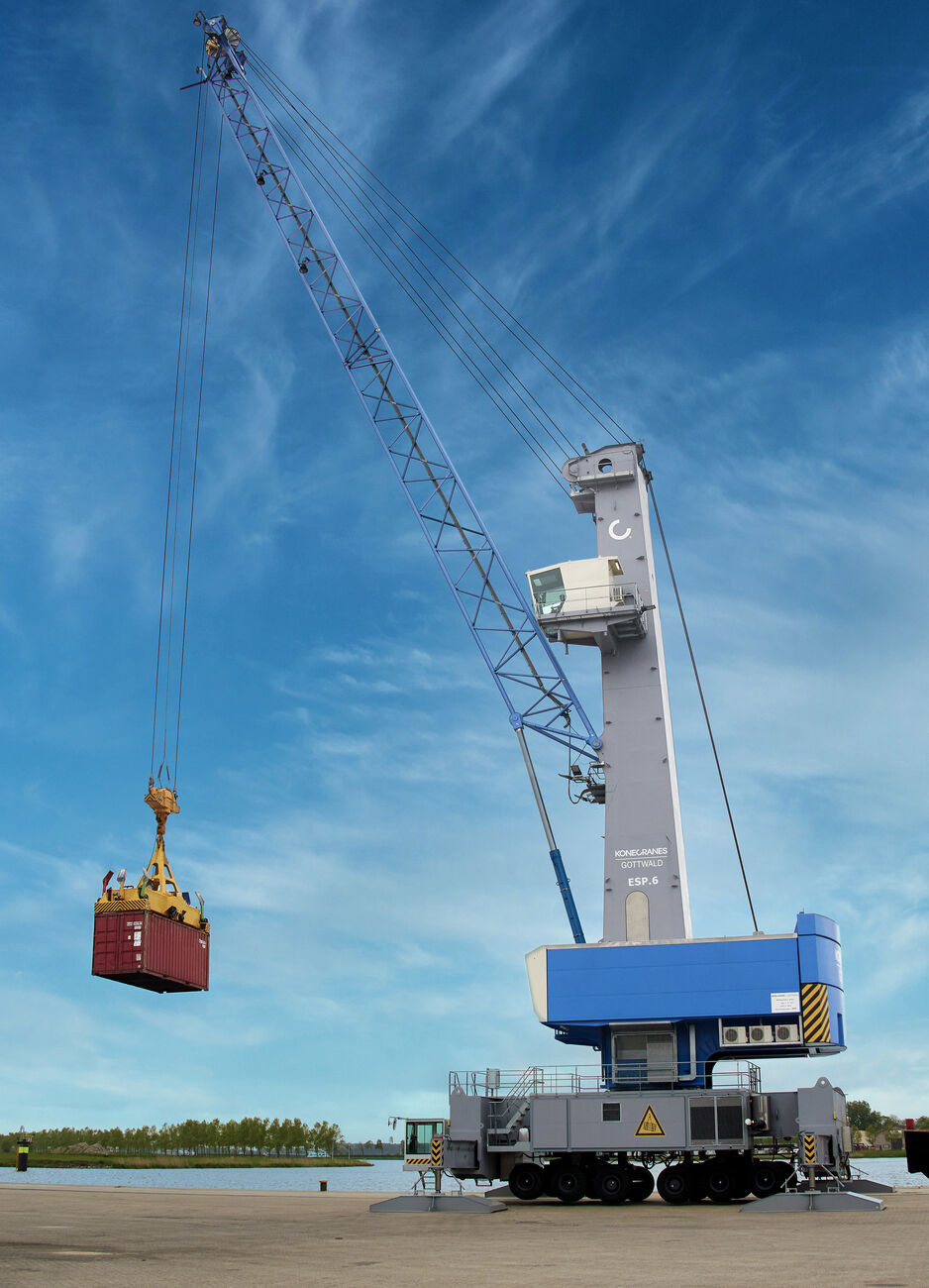
- Tisur has ordered a 125-tonne Konecranes Gottwald ESP.6 mobile harbour crane for Peru’s Port of Matarani.
- The machine will handle containers, project cargo and bulk material using a motor grab and a capacitor-supported hybrid drive.
- The order was booked in Q3 2026, announced on 12 November and is expected to be operational by the end of Q1 2027.
Konecranes has won an order for a Gottwald ESP.6 mobile harbour crane for the Port of Matarani in southern Peru, where Terminal Internacional del Sur (Tisur) operates a multipurpose cargo terminal. The machine has a maximum lifting capacity of 125 tonnes and is configured for container, general cargo and heavy project cargo work, with a motor grab specified for bulk material. Konecranes recorded the order in the third quarter of 2026 and disclosed it on 12 November. Tisur expects the crane to become operational by the end of the first quarter of 2027.
The purchase is Konecranes’ first sale of a factory-new mobile harbour crane in Peru. Tisur already operates a second-hand Gottwald crane manufactured in the 1990s, and the operator cited its experience with that equipment and the supplier’s local service support when choosing the new unit. The company has not announced whether the older machine will be retained or replaced. This specific order falls within Tisur’s wider US$598 million Matarani modernisation programme; US$598 million is not the value of the crane contract.
A terminal receiving containers, dry bulk and project cargo needs lifting equipment capable of working with different attachments, landing points and safety procedures. Container operations use spreaders and planned stack positions; large industrial components may require slings or specialised beams; bulk cargo can be transferred by grab to a suitable hopper or receiving system. The crane’s rated maximum load does not translate into the same permitted lift at every radius or boom position. Working conditions and the supporting quay structure can impose further limits.
Tisur has chosen a motor grab for loose bulk material. During a cycle, the attachment closes around material in the vessel hold, the crane hoists and slews the load to a discharge point, and the grab opens for unloading. Handling capacity depends on the material’s bulk density, how fully the grab closes, crane cycle time and the receiving equipment’s ability to clear each load. Konecranes has not supplied a tonnes-per-hour performance figure for the Matarani configuration, so the equipment order should not be equated with a quantified expansion in bulk throughput.
The 125-tonne rating also needs to be interpreted for individual heavy lifts. Safe lifting capacity changes with the working radius, boom geometry and operating configuration, while wind, cargo shape and lifting-point strength affect the approved lift plan. A large item must then be landed on a quay or trailer capable of supporting the load, with a route available for its onward movement. Heavy project cargo therefore requires the coordination of lifting equipment, ground bearing conditions, transport vehicles and vessel stowage rather than relying solely on a crane’s headline capacity.
The ESP.6 has been specified with a hybrid drive using capacitors to reduce energy use and emissions. Capacitors can accept and return electrical energy rapidly during repeated machine movements, making them suitable for a duty cycle that alternates between lifting, lowering and repositioning loads. Konecranes has not disclosed a site-specific energy baseline or expected percentage saving for Matarani. The hybrid configuration also allows for a future transition to fully electric operation, which is separate from the drive arrangement selected for delivery.
Fully electric operation would require an appropriately rated and reliable shore power connection, as well as the compatible supply and cable arrangements for the berth. The November release does not confirm that this electrical infrastructure is already installed or give a timetable for conversion. The ordered machine should therefore be described as hybrid and capable of future electrification, rather than as an all-electric crane entering service in 2027. Power availability at the waterside will determine whether that option is eventually taken up.
Matarani handles a mixture of industrial, containerised and commodity freight moving through southern Peru. Multipurpose handling equipment can be useful where vessel calls and cargo types change from day to day, but berth productivity also depends on adequate yard space, inland vehicles, safe traffic routes and receiving facilities. An additional crane may increase the range of cargo the terminal can accommodate and help manage overlapping operations; any improvement in vessel turnaround has yet to be demonstrated under actual operating conditions.
Tisur’s US$598 million investment programme provides the context for the equipment order, but Konecranes has not allocated that figure between cranes, quay works, storage areas or other infrastructure. The supplier has established a maintenance relationship through the existing Gottwald crane, which may help with parts support and technician familiarity. No contract price or detailed deployment sequence for the ESP.6 has been released. Its delivery, installation and acceptance will constitute separate milestones before it enters the normal working rotation.
Commissioning will require load testing, attachment changes, operator training and integration with the terminal’s traffic and safety rules. Different operating modes will need approved lift charts and clear procedures for cargo transfer from ship to shore. Tisur’s stated objective is to have the new machine operational by the end of March 2027, while the scope of its overall modernisation programme extends beyond this purchase. Measured cargo capacity and energy use will depend on the actual mix of container, bulk and project cargo handled after commissioning.